Introduction
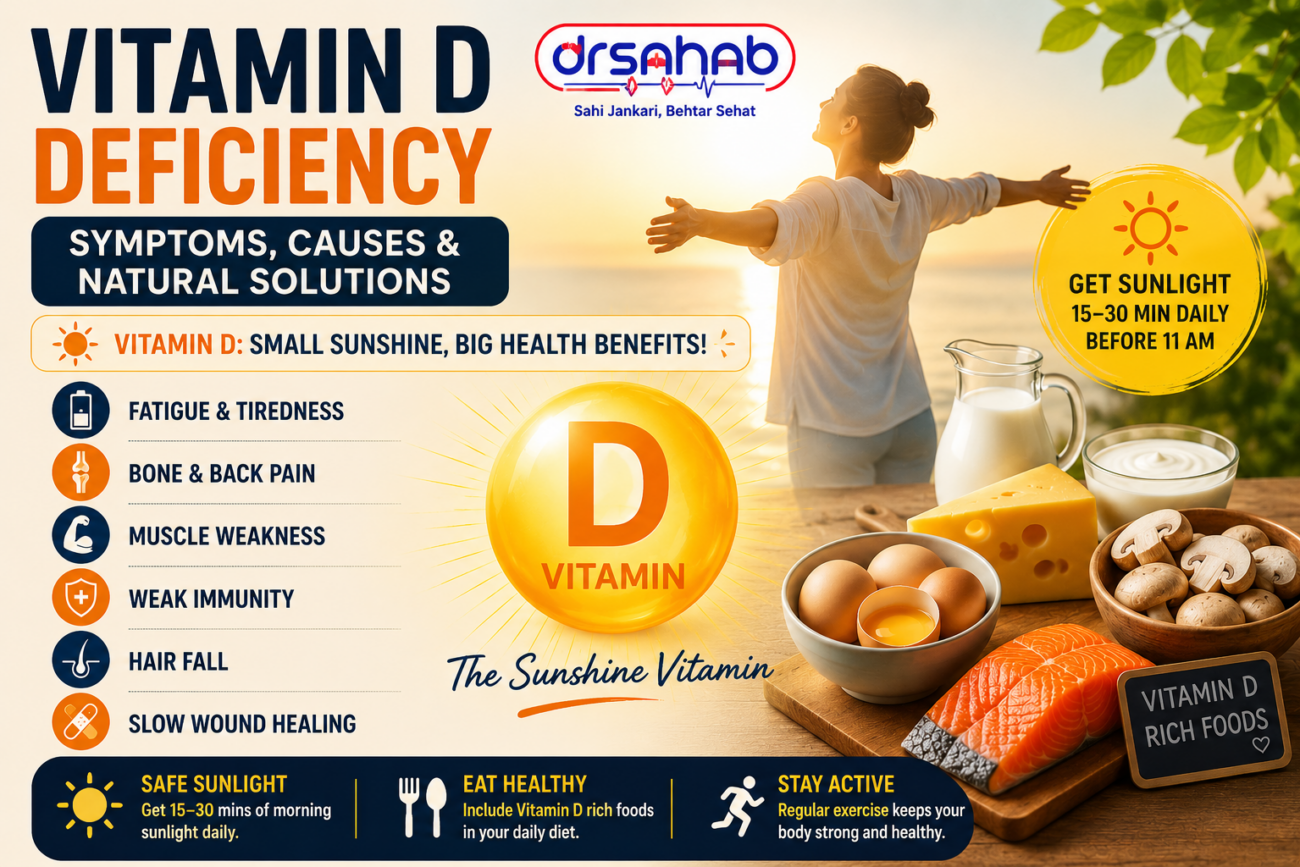
Vitamin D is an important nutrient that helps your body maintain strong bones, healthy muscles, and a strong immune system. It is widely known as the “sunshine vitamin” because your skin naturally produces it when exposed to sunlight.
Nowadays, Vitamin D deficiency has become very common among both adults and children. Busy lifestyles, spending more time indoors, lack of sunlight, and unhealthy eating habits are some of the major reasons behind this problem. Many people may have low Vitamin D levels without realizing it because the symptoms usually appear gradually.
What Does Vitamin D Do in the Body?
Vitamin D mainly helps the body absorb calcium, which is necessary for strong bones and teeth.
It also supports:
- Muscle health
- Immune system function
- Brain and nerve health
- Mood balance
- Energy levels
A lack of Vitamin D can affect both physical and mental well-being.
Common Symptoms of Vitamin D Deficiency
1. Feeling Tired All the Time
One of the most common signs of low Vitamin D is constant tiredness. Even after getting enough sleep, you may still feel weak, low on energy, or exhausted during the day.
2. Bone and Back Pain
Vitamin D is important for maintaining healthy bones. Low levels may lead to:
- Lower back pain
- Joint discomfort
- Weak bones
- General body aches
Long-term deficiency can make bones weaker over time.
3. Muscle Weakness
If your muscles feel weak or you experience cramps frequently, your body may not be getting enough Vitamin D. Daily activities such as climbing stairs or lifting objects may feel more difficult than usual.
4. Frequent Colds and Infections
Vitamin D plays a key role in supporting the immune system. People with low Vitamin D levels may fall sick more often or take longer to recover from common illnesses.
5. Hair Fall
Hair fall can happen due to several reasons, including stress and poor nutrition. In some cases, low Vitamin D levels may also contribute to excessive hair loss.
6. Mood Changes
Low Vitamin D may affect mood and emotional health. Some people experience:
- Mood swings
- Irritability
- Low motivation
- Feeling mentally low
Maintaining healthy Vitamin D levels may help support overall emotional well-being.
7. Slow Healing of Wounds
If cuts, bruises, or small wounds take a long time to heal, it may be a sign that your body’s recovery process is slower due to Vitamin D deficiency.
Why Does Vitamin D Deficiency Happen?
There are several reasons why Vitamin D deficiency is becoming more common today, including:
- Spending less time outdoors
- Limited sunlight exposure
- Poor dietary habits
- Excessive sunscreen use
- Aging
- Obesity
- Certain digestive problems
Modern indoor lifestyles are one of the biggest causes.
Natural Ways to Improve Vitamin D Levels
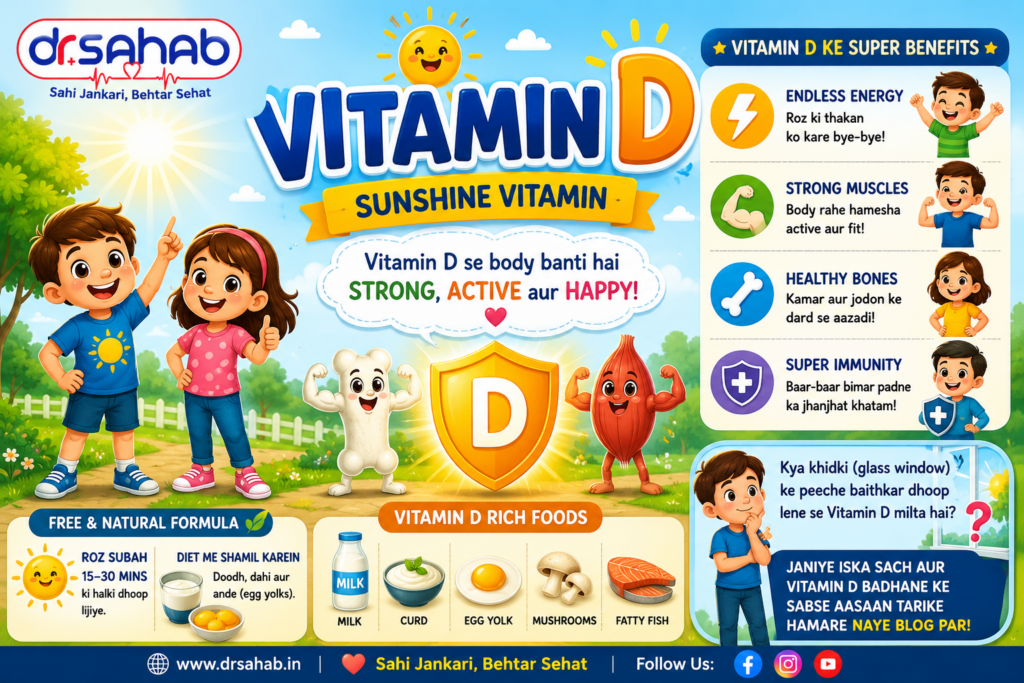
1. Get Regular Sunlight
Sunlight is one of the best natural sources of Vitamin D.
Try to spend:
- 15–30 minutes in sunlight daily
- Preferably during the morning hours
Allow direct sunlight exposure on your face and arms whenever possible.
2. Eat Foods Rich in Vitamin D
Adding Vitamin D rich foods to your diet may help improve your levels naturally.
Some good options include:
- Egg yolks
- Milk and dairy products
- Mushrooms
- Fatty fish
- Fortified cereals
A balanced diet supports better overall health.
3. Stay Physically Active
Regular exercise helps strengthen muscles and bones. Activities such as walking, stretching, yoga, or light exercise can improve overall fitness and energy levels.
4. Follow a Healthy Lifestyle
Healthy habits like proper sleep, staying hydrated, managing stress, and eating nutritious foods can support your body’s natural recovery process.
Quick Checklist
- Spend time in sunlight regularly
- Eat nutritious foods rich in Vitamin D
- Stay physically active
- Pay attention to symptoms like tiredness and body pain
- Consult a doctor if symptoms continue
Frequently Asked Questions (FAQs)
Q1: Can I get enough Vitamin D while sitting near a window?
No. Glass blocks the UVB rays needed for the skin to produce Vitamin D. Direct outdoor sunlight exposure is more effective.
Q2: Should I take Vitamin D supplements without consulting a doctor?
It is always better to consult a healthcare professional before taking supplements regularly. Excess intake may lead to unwanted health problems.
Q3: How long does it take to improve Vitamin D levels?
With proper sunlight exposure, healthy food, and medical guidance if needed, many people start noticing improvement within a few weeks. Recovery time may vary from person to person.
Trusted Sources and References
- World Health Organization (WHO): Nutritional Health Standards
- Centers for Disease Control and Prevention (CDC): Micronutrient Facts
- Mayo Clinic: Vitamin D Overview and Deficiency Symptoms
