Introduction
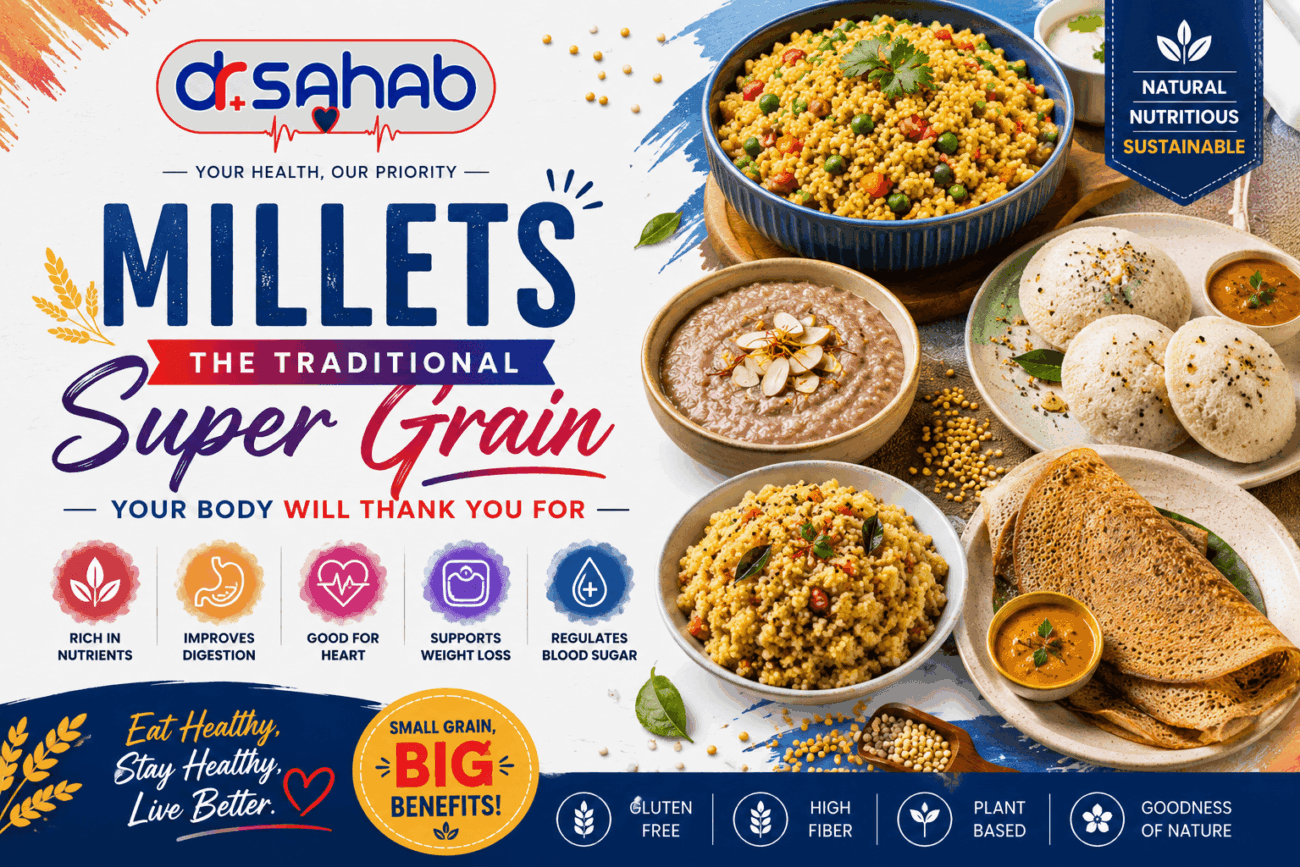
In today’s fast-paced world, more people are focusing on natural nutrition and clean eating habits. One traditional superfood making a powerful comeback in modern diets is millets. These small yet nutrient-rich grains have been a foundational part of Indian agriculture and nutrition for thousands of years.
What Are Millets?
Millets are a group of small-seeded grasses cultivated as grain crops. They are highly resilient and can grow naturally without requiring excessive water or heavy chemical fertilizers. Since millets are minimally processed, they retain their natural bran layer, making them a healthier alternative to refined grains like white flour (maida) and polished rice.
Some of the most commonly consumed millets in traditional Indian diets include:
- Bajra (Pearl Millet)
- Ragi (Finger Millet)
- Jowar (Sorghum)
- Foxtail Millet
- Little Millet
These grains are naturally gluten-free, easy to digest, and suitable for people of all age groups.
5 Major Health Benefits of Millets
1. Promotes Better Digestive Health
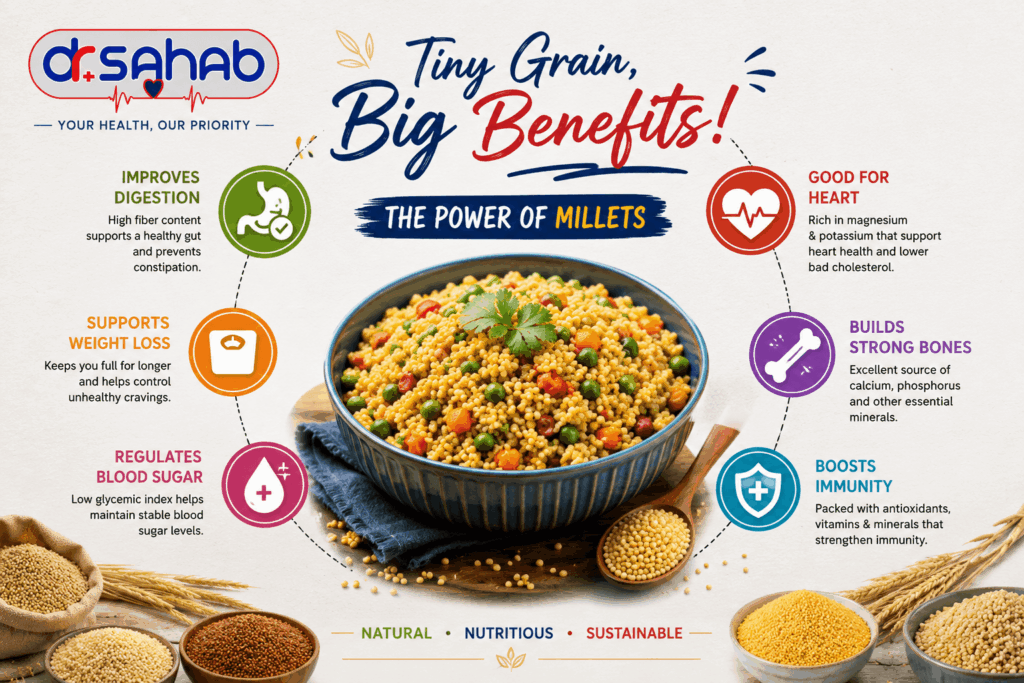
Millets are rich in dietary fiber, which acts as a natural prebiotic and supports healthy gut bacteria. They help improve digestion, support regular bowel movements, and reduce common digestive problems like constipation and bloating.
2. Supports Sustainable Weight Management
Unlike refined carbohydrates that digest quickly and trigger sudden hunger pangs, millets are complex carbohydrates that release energy slowly into the bloodstream. This helps you stay full for longer periods and reduces unnecessary cravings and overeating.
3. Protects Heart Health
Millets contain important minerals like magnesium and potassium that help relax blood vessels and support healthy blood pressure levels. Their high soluble fiber content may also help reduce low-density lipoprotein (LDL) or bad cholesterol, promoting better cardiovascular health over time.
4. Helps Regulate Blood Sugar Levels
Millets have a lower glycemic index compared to refined grains such as white rice and refined wheat. This means they release sugar more gradually into the bloodstream, making them a healthier dietary option for people managing diabetes or blood sugar fluctuations.
5. Rich in Essential Nutrients
Millets are packed with plant-based protein, B-complex vitamins, zinc, iron, and antioxidants. These vital nutrients support daily immunity, cellular repair, energy production, and overall wellness.
Easy Ways to Add Millets to Your Daily Meals
Adding millets to your diet is simple and practical. You can replace processed grains with healthier millet-based alternatives such as:
- Millet Roti: Use Bajra or Jowar flour instead of refined wheat flour.
- Millet Khichdi: Replace white rice with whole unpolished foxtail millet or little millet.
- Millet Dosa or Idli: Use fermented Ragi batter for a nutrient-rich breakfast alternative.
- Millet Porridge: Warm ragi malt makes a filling and healthy breakfast for both children and adults.
Quick Checklist for Transitioning to Millets
- Start by replacing one meal a day with a millet-based option to let your system adapt.
- Soak whole millets for 2 to 4 hours before cooking to improve nutrient absorption and break down phytic acid.
- Gradually mix millet flour with regular wheat flour when preparing rotis.
- Stay well-hydrated, as fiber-rich foods require adequate water intake to process smoothly.
Frequently Asked Questions (FAQs)
Q1: Can I eat millets every day?
Dr. Sahab: Yes, millets can be consumed daily. However, it is best to rotate different varieties like Ragi, Jowar, and Bajra to ensure a balanced intake of diverse micronutrients.
Q2: Are millets safe for people with thyroid issues?
Dr. Sahab: Certain millets contain natural compounds called goitrogens, which may interfere with iodine absorption if consumed excessively in raw form. However, soaking, fermenting, and cooking significantly reduce these compounds, making millets perfectly safe when eaten in moderation as part of a balanced diet.
Q3: Is it better to buy whole millets or millet flour?
Dr. Sahab: Whole millets generally retain more nutrients and fiber. If purchasing millet flour, try to buy freshly ground flour in small quantities, as pure millet flour contains no gluten and has a shorter shelf life than refined wheat flour.
Final Thoughts
Healthy living does not have to be complicated or expensive. Simple dietary changes—like replacing refined grains with traditional options such as Ragi, Jowar, and Bajra—can make a significant difference to your long-term health.
Eat traditional. Stay active. Live healthier.
Disclaimer: This article is intended for educational and informational purposes only and should not replace professional medical advice, diagnosis, or treatment. Always consult a qualified healthcare professional before making major dietary changes.
