Introduction
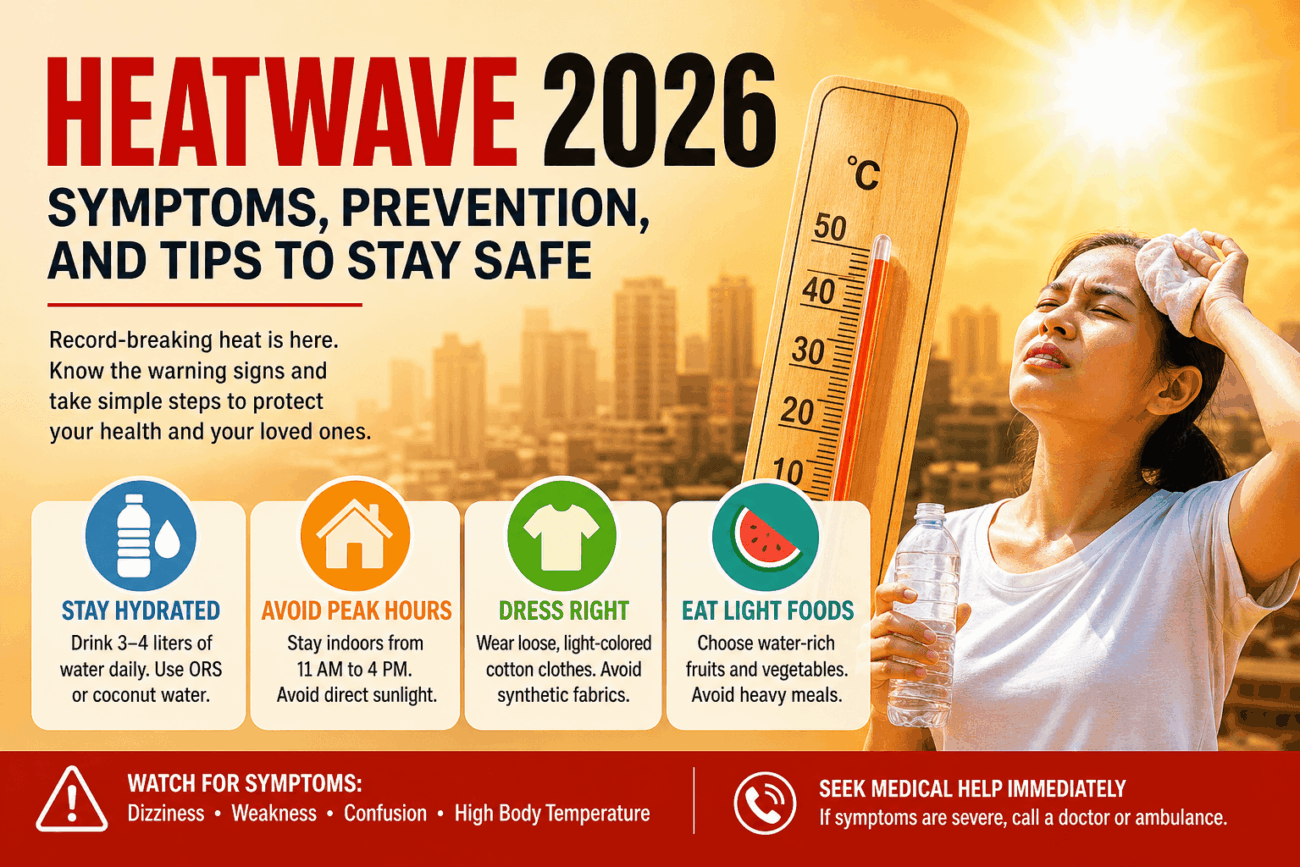
The summer of 2026 has brought record-breaking heat. Temperatures in many areas are reaching 45°C to 49°C. These extreme conditions are dangerous and increase the risk of heatstroke, dehydration, and heat exhaustion.
What is a Heatwave?
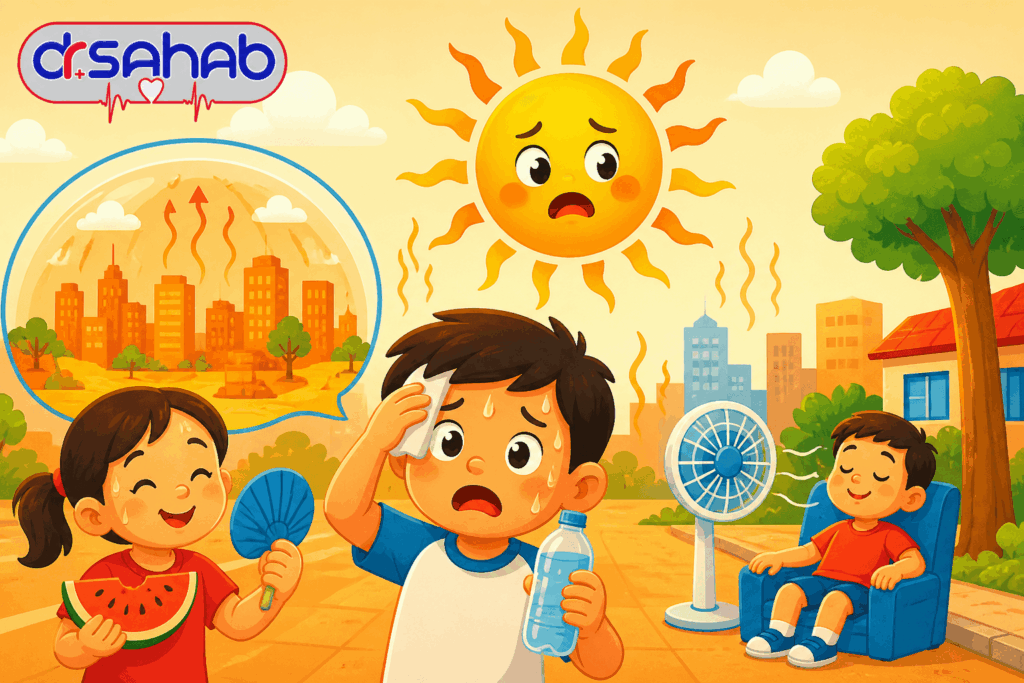
A heatwave is a long period of extremely hot weather. In 2026, we are seeing a “heat dome” effect. This happens when hot air gets trapped over cities like a lid on a pot. This makes it very hard for the body to cool down naturally.
Warning Signs: Heat Exhaustion vs. Heatstroke
Knowing the symptoms early can prevent a medical emergency.
1. Heat Exhaustion (Early Signs)
- Heavy sweating
- Feeling dizzy or faint
- Muscle pain or weakness
- A very fast pulse (heartbeat)
2. Heatstroke (Medical Emergency)
- High body temperature (above 103°F or 39.4°C)
- Feeling confused or acting strangely
- A severe, throbbing headache
- Hot, red, and dry skin (no sweating)
- Action: If you see these signs, call for a doctor or an ambulance immediately.
How to Stay Safe During the Heat
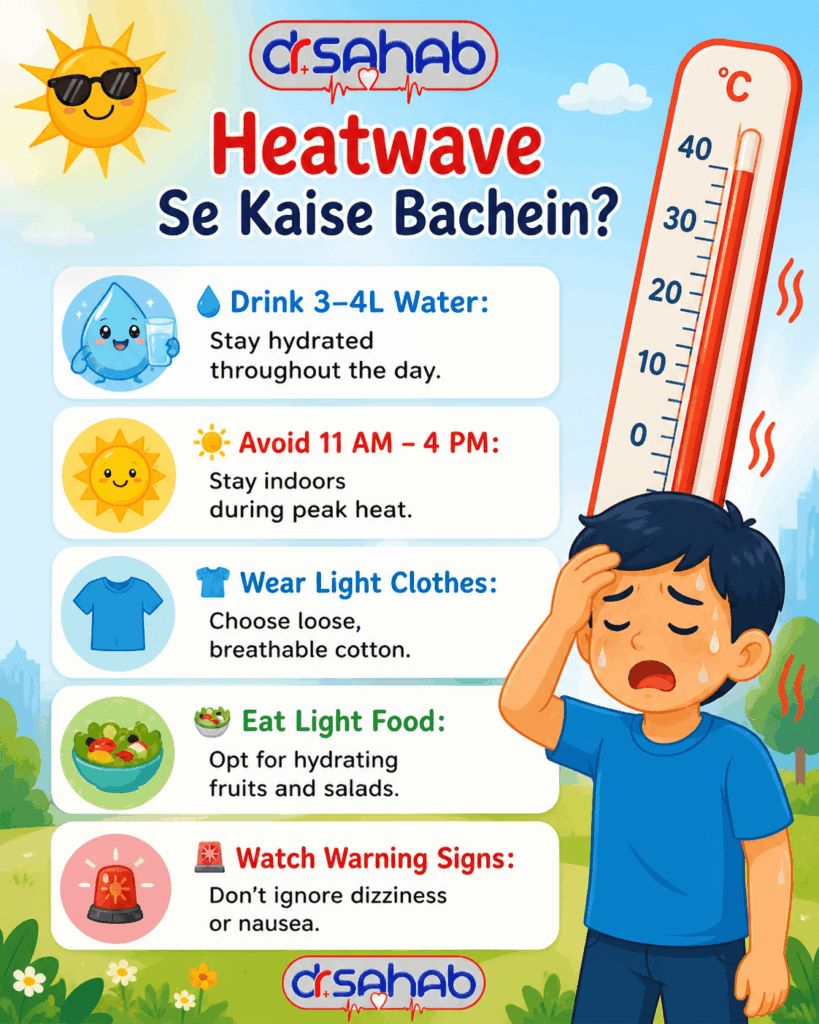
1. Drink Plenty of Water
- Drink 3 to 4 liters of water every day.
- Do not wait until you are thirsty to drink.
- Drink healthy liquids like coconut water, lemon water, or ORS (saline).
- Avoid too much tea, coffee, or sugary cold drinks.
2. Stay Indoors During Peak Hours
- Stay inside between 11:00 AM and 4:00 PM when the sun is strongest.
- If you must go outside, use an umbrella or a hat and walk in the shade.
3. Wear the Right Clothes
- Choose loose, light-colored clothes made of cotton.
- Avoid tight or synthetic fabrics (like polyester) because they trap heat against your skin.
4. Eat Light Foods
- Eat foods with a lot of water, such as watermelon, cucumber, and oranges.
- Avoid heavy, oily, or spicy meals.
Who Needs Extra Care?
Some people are at a higher risk and need your help:
- Babies and young children.
- Elderly people (the older generation).
- People who work outside in the sun.
- People with heart or lung health issues.
Quick Safety Checklist
- Drink 3 to 4 liters of water daily.
- Stay out of the sun from 11 AM to 4 PM.
- Wear loose cotton clothes.
- Eat fresh, light food.
- Watch for dizziness or confusion.
Frequently Asked Questions (FAQs)
Q1: How do I know if I am dehydrated?
Dr. Sahab: Check the color of your urine. If it is dark yellow, you are dehydrated and need water. If it is pale yellow or clear, you are well-hydrated.
Q2: Is a fan enough to keep me cool?
Dr. Sahab: When it is hotter than 35°C, a fan just moves hot air around. It is better to take a cool shower or put a wet cloth on your skin to cool down.
Q3: Can I drink cold soft drinks to stay cool?
Dr. Sahab: It is better to avoid them. Drinks with a lot of sugar can actually make dehydration worse. Choose plain water or coconut water instead.
Trusted Sources and References
For official updates and more health advice, please visit:
- World Health Organization (WHO): Climate and Health
- India Meteorological Department (IMD): Weather Alerts
- Centers for Disease Control (CDC): Extreme Heat Guide
- Mayo Clinic: Heatstroke Information
Final Thoughts
The 2026 Heatwave is a serious matter, but you can stay safe by following these simple steps. Small habits every day will protect you and your family.
Stay Aware. Stay Hydrated. Stay Safe.
Expert Suggestions:
Dr Manav says: “Hot weather can make you sick fast. Drink water, stay in shade, and don’t play in the sun for too long.”
