Introduction
Periods are a natural and healthy part of a woman’s reproductive life. Yet, many girls and women often wonder what habits they should follow and what they should avoid during their menstrual cycle.
Practicing healthy habits during menstruation can help reduce discomfort, prevent infections, improve energy levels, and support overall well-being.
This comprehensive guide covers the most important period dos and don’ts to help you stay healthy, comfortable, and confident every month.
Common Period Symptoms
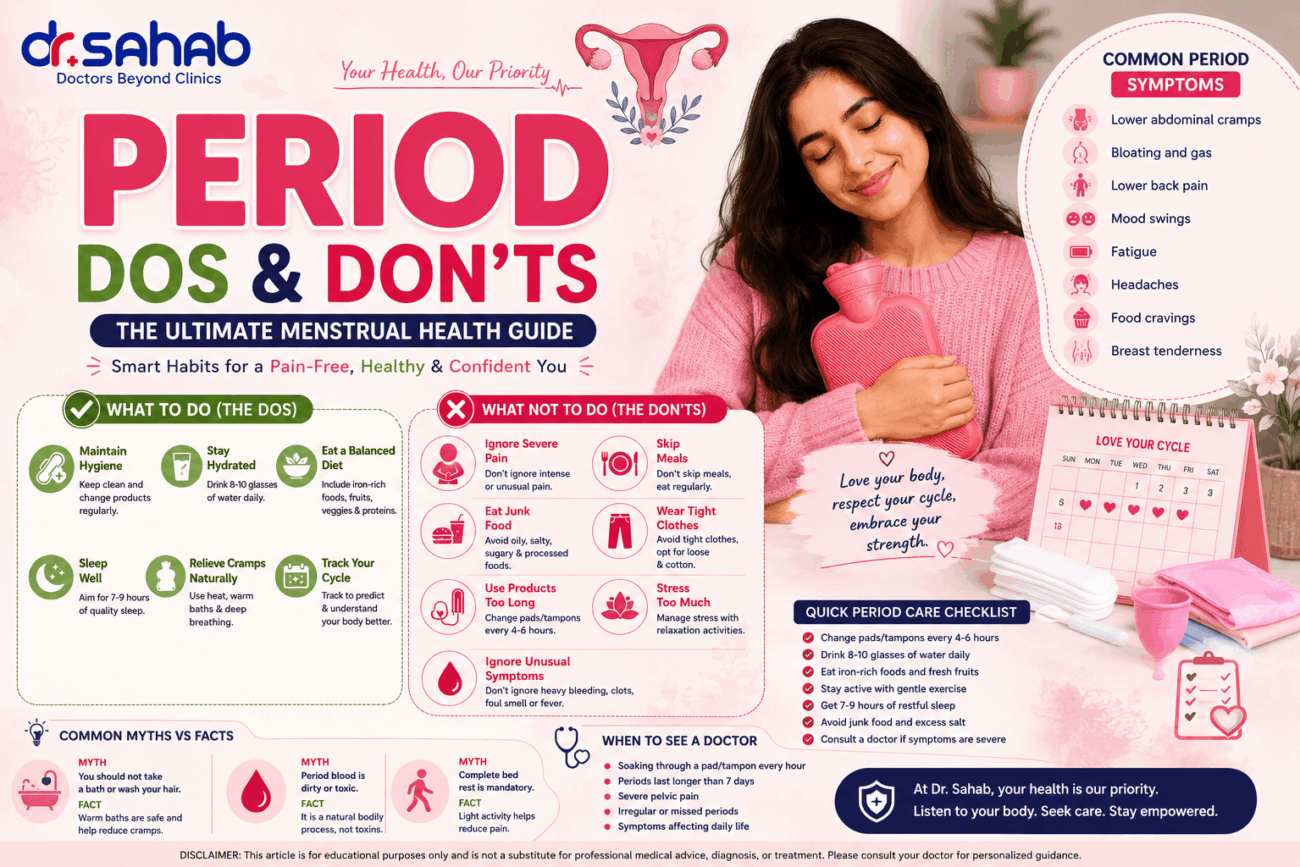
Every woman experiences menstruation differently. Understanding the common symptoms can help you manage your cycle more effectively and recognize when to seek medical advice:
- Lower abdominal cramps
- Bloating and gas
- Lower back and joint pain
- Mood swings and irritability
- Fatigue and low energy
- Headaches
- Food cravings (especially for sweets or salts)
- Breast tenderness
What to Do During Your Period (The Dos)
1. Maintain Proper Menstrual Hygiene
Good menstrual hygiene is essential for preventing skin irritation and bacterial infections.
- Change sanitary pads every 4–6 hours.
- If using tampons, replace them every 4–8 hours.
- Always wash your hands before and after changing menstrual products.
- Clean the genital area gently with plain water and keep it dry.
- Wear clean, breathable cotton underwear.
2. Stay Hydrated
Drinking enough water helps your body flush out excess fluids, which reduces painful bloating, improves digestion, and eases menstrual cramps. Try to drink 8–10 glasses of water daily. You can also include healthy alternatives like coconut water, lemon water, or warm herbal teas.
3. Eat a Balanced and Nutritious Diet
Your body loses iron and essential nutrients during menstruation. A healthy diet helps restore your energy levels and reduces physical fatigue.
- Foods to include: Green leafy vegetables (like spinach), fresh fruits, whole grains, nuts, seeds, and lean proteins (eggs, pulses, fish, and chicken).
- Foods to ease cramps: Bananas (rich in potassium), ginger, turmeric, yogurt, and omega-3-rich foods.
4. Engage in Light Exercise
Contrary to popular belief, staying completely sedentary can make your pelvic muscles stiff, worsening your pain. Light physical activity releases endorphins—the body’s natural “feel-good” hormones—which act as natural painkillers.
- Recommended activities: Brisk walking, gentle yoga, light stretching, or slow cycling.
5. Prioritize Quality Sleep
Hormonal shifts during menstruation can disrupt your deep sleep cycles, leaving you feeling exhausted. Aim for 7–9 hours of sleep every night. To improve sleep quality, maintain a consistent bedtime routine and avoid mobile or television screens for at least 30 minutes before bed.
6. Manage Cramps Naturally
Mild menstrual cramps can often be relieved with simple home remedies before turning to medication.
- Apply a heating pad or a hot water bottle to your lower abdomen.
- Take a warm bath to relax tense muscles.
- Practice deep breathing exercises or gentle pelvic stretches.
7. Track Your Menstrual Cycle
Monitoring your cycle helps you map out your reproductive health. Tracking allows you to predict future periods, identify irregular cycles early, monitor symptom patterns, and notice any unexpected changes in your blood flow. You can track this easily using a calendar, a diary, or a digital period-tracking application.
What Not to Do During Your Period (The Don’ts)
1. Do Not Ignore Severe Period Pain
While mild cramping is common, intense, debilitating pain is a warning sign. Consult a healthcare professional if the pain prevents you from attending work or school, or if standard over-the-counter pain relief provides no comfort. Severe pain may point to underlying conditions like endometriosis or uterine fibroids.
2. Do Not Skip Meals
Your body requires steady fuel to manage hormonal fluctuations. Skipping meals causes a sudden drop in blood sugar, resulting in severe fatigue, dizziness, headaches, and heightened mood swings. Eat smaller, well-balanced meals throughout the day.
3. Limit Junk Food and Highly Processed Foods
Foods high in refined sugars, excessive salt, and trans fats trigger internal inflammation. This can worsen fluid retention, leading to painful bloating and digestive discomfort. Limit fried snacks, carbonated sodas, and processed bakery foods.
4. Avoid Wearing Tight Clothing
Wearing skin-tight jeans or restrictive synthetic undergarments can trap moisture and heat around sensitive areas. This increases the risk of friction rashes and vaginal yeast infections. Opt for loose-fitting clothing and breathable fabrics.
5. Never Use Menstrual Products for Too Long
Leaving a pad, tampon, or menstrual cup unchanged for extended periods increases bacterial growth. Prolonged tampon use is directly linked to a rare but life-threatening bacterial condition known as Toxic Shock Syndrome (TSS). Always swap out your products within the recommended hourly windows.
6. Avoid Excessive Stress
High mental stress levels release cortisol, which directly interferes with your reproductive hormones and can make your physical cramps feel significantly more intense. Practice stress-management techniques such as meditation, deep breathing, reading, or spending time in nature.
7. Do Not Ignore Unusual Visual Symptoms
Pay close attention to changes in your cycle. Seek medical advice if you notice extremely heavy bleeding (soaking a pad every hour), passing very large blood clots, foul-smelling vaginal discharge, a sudden fever, or pelvic pain outside your period dates.
Quick Period Care Checklist
- Change pads or tampons every 4–6 hours.
- Drink at least 8–10 glasses of water daily.
- Focus on iron-rich foods, fresh fruits, and proteins.
- Keep moving with soft walking or gentle yoga.
- Get 7–9 hours of restful sleep every night.
- Avoid processed junk food and excessive salt.
- Consult a doctor if your symptoms become unmanageable.
Common Period Myths vs. Facts
- Myth 1: You should not take a bath or wash your hair.
- Fact: Taking a warm bath is completely safe. It improves personal hygiene and helps relax contracted uterine muscles, lowering your pain.
- Myth 2: Period blood is “dirty” or “toxic” blood.
- Fact: Menstrual blood is a perfectly normal biological combination of fresh blood and shed uterine tissue. It is not an extraction of bodily toxins.
- Myth 3: Complete bed rest is mandatory.
- Fact: While resting is important, lying completely flat all day can increase joint stiffness. Light movement helps blood flow smoothly and reduces cramp intensity.
When Should You See a Doctor?
Please schedule an appointment with a gynecologist or healthcare provider if:
- You consistently soak through a pad or tampon every hour.
- Your periods suddenly become highly irregular or stop entirely.
- Your bleeding lasts longer than seven continuous days.
- You experience severe, sharp pelvic pain.
- Menstrual symptoms interfere with your basic daily activities.
Every woman’s experience is unique. Listen to your body, pay attention to unusual changes, and always seek professional medical advice whenever needed.
Stay Aware. Stay Healthy. Stay Confident.
Frequently Asked Questions (FAQs)
Q1: Can I drink coffee during my period?
Dr. Sahab: Moderate caffeine consumption is generally safe. However, excessive caffeine can constrict blood vessels, which may worsen uterine cramps, increase anxiety, or elevate breast tenderness in some women.
Q2: Why do I crave sugary foods during my period?
Dr. Sahab: Hormonal changes can temporarily lower your brain’s serotonin levels (the happy hormone), causing your body to crave quick energy sources like sugar. Choosing healthier alternatives like dark chocolate, sweet fruits, or nuts can satisfy these cravings naturally.
Q3: Is it normal for periods to be irregular?
Dr. Sahab: Occasional shifts can happen due to high stress, sudden weight fluctuations, traveling, or lifestyle changes. However, persistent, long-term irregular cycles should always be evaluated by a healthcare professional.
Medical Disclaimer
This article is intended for educational and informational purposes only and should not be considered a substitute for professional medical advice, diagnosis, or treatment. Always consult a qualified healthcare professional regarding any concerns about your menstrual health.
